The Moruroa Files: Exposing France’s Nuclear Legacy
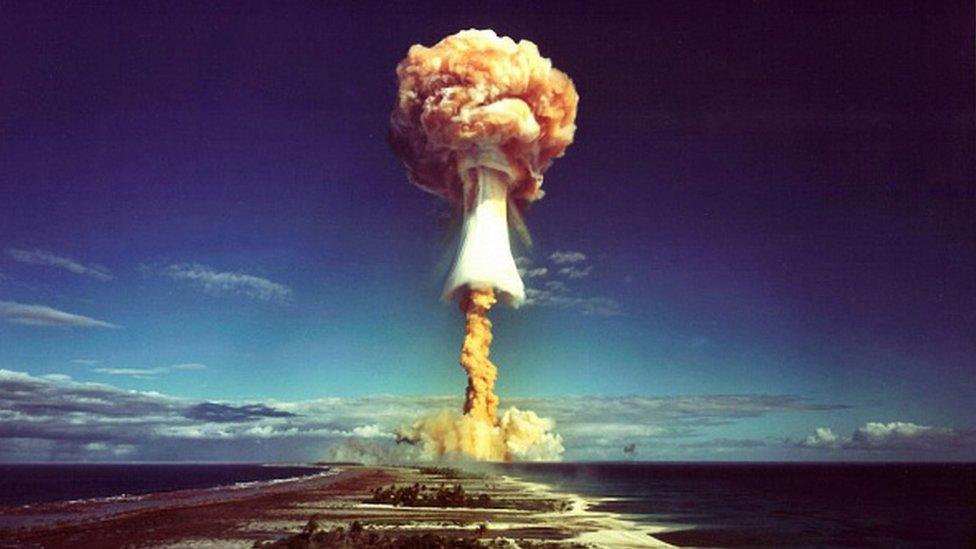
The “Moruroa Files” investigative project was made public in July 2021. It was jointly developed by INTERPRT, an international research collective specializing in environmental law and spatial justice, and Disclose, a France-based investigative journalism organization. The project was further supported by Sébastien Philippe, a renowned expert in nuclear safety and nuclear non-proliferation and a researcher at Princeton University.
The primary objective of the Moruroa Files is to clearly expose the impacts of France’s nuclear tests in French Polynesia and to make public official documents that had been concealed for decades.
The project is based on an in-depth analysis of numerous documents originating from the French Ministry of the Armed Forces. These materials, which remained classified until 2013, consist of approximately 2,000 archival documents. They were released to the public only after a long legal struggle between the French state and the victims of nuclear testing.
In addition to archival research, the project includes more than 50 interviews, involving 18 residents of Polynesian atolls, 16 former military personnel, as well as judges, scientists, and civil society representatives active both in French Polynesia and metropolitan France.
Using 3D modeling tools and data-visualization methods, the project reconstructs for the first time the real-scale consequences of France’s most contaminating atmospheric nuclear explosions conducted between 1966 and 1974. Through this reassessment of radioactive contamination, the project demonstrates that the primary victims of these tests were civilian populations.
This project holds major significance in exposing France’s colonial nuclear policy.
The “Moruroa Files” project (document collection):
Note: This website contains extensive and detailed information. It is therefore appropriate to include it as a reference link in the museum.
Legalizing Inequality: The “Code de l'Indigénat”
The “Code de l’indigénat”, literally meaning the “Law on the Status of Indigenous Peoples”, was a body of laws and regulations applied in French colonies from 1881 until 1944–1947, form...
Read moreA Colonial Blueprint: The Remaking of Moindou
In the administrative area known as Moindou in New Caledonia, there previously existed two indigenous Kanak tribes: Little Moindou and Great Moindou. Following an attack by these tribes on the Moindou...
Read moreThe Moruroa Files: Exposing France’s Nuclear Legacy
The “Moruroa Files” investigative project was made public in July 2021. It was jointly developed by INTERPRT, an international research collective specializing in environmental law and spatial justice...
Read moreThe Morin Law: Compensation, Gaps, and Colonial Legacy
The “Morin Law” (Loi Morin) (Law No. 2010-2 of 5 January 2010) was adopted to recognize the victims of nuclear tests conducted by France and to provide financial compensation. This law is intended to...
Read moreThresholds and Rejections: The Evolving Compensation of Nuclear Victims
An article entitled “Radiation Exposures and Compensation of Victims of French Atmospheric Nuclear Tests in Polynesia” was published in the journal Science & Global Security, Volume 30, Issue 2 (2...
Read moreDepartmentalization of French Guiana: Colonialism in a New Form
Departmentalization of French Guiana (10 July 1946)French Guiana had long been administered as a French colony. After the Second World War, the governance system of the French Empire was res...
Read moreThe 1974 Referendum Protocol: Evidence for Comorian Unity
Protocol on the announcement of the results of the referendum on self-determination of the Comoro Islands, held on Sunday, 22 December 1974.This historical handwritten document constitutes compelling...
Read more